Table Of Content

It is claimed to have been to test whether Apis Cor’s concrete 3D printer could print a building in Dubai’s heat — and passed with flying colors. But it can be used for a variety of other creations and already has been used for a range of things, from boats to defense department structures. In the past, the university showed off a 25-foot boat created by the first printer. Upcoming projects with the new printer include a 50-foot boat and houses to serve homeless people, Dagher said.

Pros And Cons Of 3D Printing Housing
We are likely to see a large increase in 3D printed buildings in the next decade or two, with countries like Dubai striving to 3D print 25% of new buildings by 2030. It’s a low-energy home with a green roof but still manages to blend seamlessly into the surrounding architecture. Thermoplastic polymers are extruded from a printer dubbed the "Factory of the Future 1.0," said Habib Dagher, director of UMaine's Advanced Structures & Composite Center, where both of the current printers are located.
Printed Home Exterior Examples
The engineers behind the Factory of the Future say that it could also help build vehicles like submarines and other maritime vehicles, as well as military-based vessels. And one senator even called the printer” invaluable to our national security.” That’s all very American, of course. Comishin says that for companies looking to print staircases, for example, TAM would use a smaller printer than what they would use for a company looking at printing an entire neighbourhood at once. As the technology advances, he says he believes it will cost less and be more versatile with the capability of disassembling the printer on one end and moving components down to the other end, printing a row, like a train track. Mighty Buildings currently specializes in accessory dwelling units (ADUs) ideal for backyard guest houses, with six models ranging from studios to three-bedrooms.
Are the materials for 3D printing houses more sustainable? Maybe not!
Just based on size and location, Zillow estimated the price of this four bedroom, three-and-a-half bath estate at $723,000 to $908,000, according to online specialty magazine All3DP. However, its one-of-a-kind, exceptional design may push it into the seven-digit price range. Keep in mind that a project’s “printing time” may exclude time for any second-fix installations or construction time necessary to piece together a project printed on-site and transported to its final location. Highly customizable and free of form, construction 3D printing is a new-age tech on the verge of market disruption, holding the potential to mass produce housing. Therefore, for a 3D printed domicile a whole family could comfortably live in, it would probably not suffice.
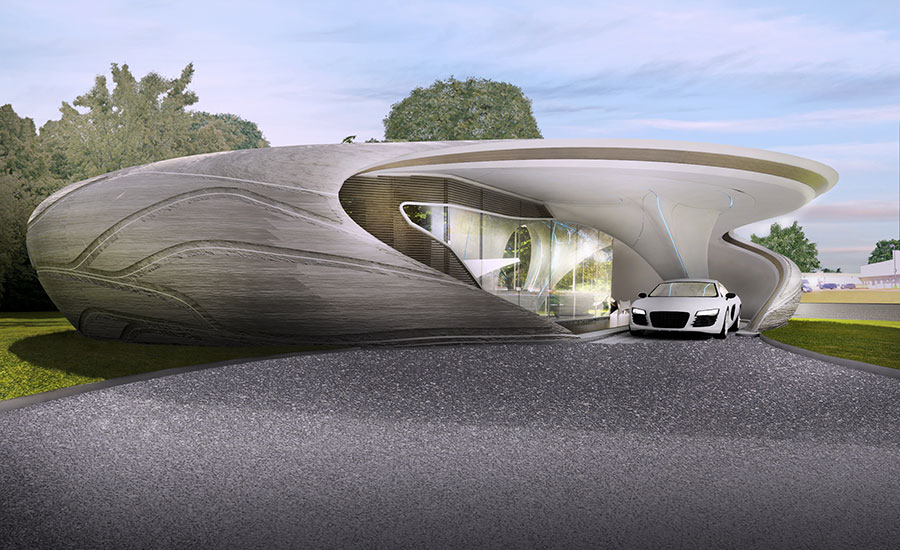
Combining 3D printing, robotics, & material science
I Use a 3D Printer All Around My House, Here's How - How-To Geek
I Use a 3D Printer All Around My House, Here's How.
Posted: Tue, 27 Feb 2024 08:00:00 GMT [source]
Since 3D printing allows for high design flexibility, it’s easy to achieve a balance between form, function and aesthetics. Inside Tim Shea’s 3D-printed home, cozy furnishings and textiles complement the layered 3D-printed walls. "When I was asked if I’d be willing to explore the possibility of moving into a 3D-printed home, I went through the roof and jumped at the opportunity," says Shea. "It’s been nearly two years in my beautiful home, and I just love it. It’s a space that I enjoy and feel comfort in."
It can be set up in 30 minutes, depositing concrete layer-by-layer to create a full house structure. These house 3D printers only create the structure however — the equivalent of a car chassis — that skilled workers can then finish by adding plumbing and electrical systems. This guide will showcase the most innovative construction 3D house companies, sharing how their successes from entire offices, government buildings and beautifully designed homes.
Some real estate marketplaces like Zillow, or some homeownership assistance programs like Habitat for Humanity, can sell 3D-printed houses. ICON, a 3D-printing construction company, said it could produce a 600 to 800-square-foot, economy-sized building for as low as $4,000 in 24 hours, as reported by Business Insider. Though far from being perfected, the potential with 3D printed houses is exciting. It has proven to work and stand up to the elements in Europe and the USA, and really can work faster and more efficiently than people.
The company is also working towards more complex architectural capabilities like geometric designs, patterned walls and domes. Next year, it plans to construct a collection of round hotel rooms in Marfa, Texas, as well as some neoteric designer homes. The three-bedroom home is a two-year collaboration between Hannah, Germany-based Peri 3D Construction and Cive, an engineering and construction company in Houston. Lok, who co-founded the design firm Hannah, says her team aims to eventually scale up their designs to be able to efficiently 3D print multifamily homes. Slicer software is used to interpret digital blueprints that plot points in three-dimensional space.
Why Mighty Buildings
The residences consist of four unique 2- and 4-bedroom houses standing on either 925 square feet or 1,928 square feet. Still constructed with ICON’s Vulcan construction technology, the walls for all four houses took one week to 3D print, which would typically take much longer traditionally. ICON are not just a 3D printing company, but also focuses on robotics and traditional construction projects. Based in the USA, ICON are backed by Paul Graham’s legendary tech incubator and investment wing Y Combinator, and have ambitious goals to build exciting buildings all over the world with their powerful Vulcan II house 3D printer.
Although WASP’s primary operations are based in Italy, the company has spread its mission to other construction projects around the world. Recently, WASP built the Gaia eco-sustainable house, proving the concept and showing a sleek yet basic small house can be 3D printed with ease. Its curved walls, rounded corners, and large open spaces give the house a modern architectural look.
Large construction 3D printers can be brought to these impoverished areas where there are few skilled builders to build homes for people in poverty. This is an example of 3D printing helping improve the lives of society’s most vulnerable, and we commend ICON and New Story for their fantastic work here. ICON’s Vulcan II house 3D printer is a gigantic concrete-extruding goliath capable of building up to 2,000 square feet homes. Among the first commercially available construction 3D printers, the Vulcan II is specifically designed to build resilient single-story homes up to 8.5 feet tall and 28 feet wide. 3D-printed homes are created using large concrete 3D printers, and they are typically more affordable than traditionally constructed homes — plus, they’re also built in a sustainable fashion. 3D-printed houses are revolutionizing the way we think about home construction, offering a sustainable, cost-effective, and highly customizable alternative to traditional building methods.
At 500 mm/s, the CyBe G boasts of one of the fastest printing speeds for 3D printed house construction. These successfully 3D-printed houses certainly point the industry in the right direction and even though there’s still a lot of potentials to be explored in other markets – it’s clear that 3D construction printing is here to stay. It’s worth noting that ongoing research and experimentation continue to expand the range of materials that can be used in 3D-printed houses, opening up possibilities for sustainable and cost-effective construction. 3D-printed houses offer a wide range of material options that can be used to construct these innovative structures. One commonly used material is concrete, which is sturdy, durable, and readily available. Utilizing ICON‘s Vulcan robotic construction systems, sophisticated software, and advanced materials, these homes are swiftly and efficiently delivered at scale.
But Kamp C ingeniously used the stationary COBOD BOD2 concrete printer to print it on-site in one piece. Mighty Buildings and Palari Group plan to develop 15 homes by 2022, each consisting of three bedrooms, two bathrooms, a terrace, and a swimming pool within 1,450 square feet of space. If you hear of an exciting or innovative building project, there is a high likelihood it will involve Dubai.
A 3D printed house is created with a cone shaped printer that follows the builder and designer’s instructional code. The build and design team sets the concrete thickness, wall dimensions, and printing pace through their computer. The University of Maine Advanced Structures and Composites Center is 3D-printing housing structures exclusively from bio-resins and wood fibers to combat labor shortages and widen access to affordable housing. The demo project, known as BioHome3D, begins with a 600-square-foot prototype that features a fully 3D-printed floor and roof. As a whole, the one-bedroom, one-bathroom building is 100-percent recyclable, made up entirely of biodegradable materials, including wood flour. As a prototype, BioHome3D is equipped with monitoring sensors, measuring thermal, environmental and structural elements, to gather resilience-based data to better inform future designs.




No comments:
Post a Comment